
It is one of the most common questions leather jacket owners ask: is it safe to wear it when the weather turns? The short answer is yes. A smooth leather jacket can handle light rain and snow perfectly well. The problems start with heavy soaking, road salt, and, most of all, drying the jacket the wrong way afterward.
This guide explains what actually happens to leather in wet weather, how to protect your jacket before you head out, and exactly what to do if you get caught in a downpour.
The Short Answer
- Light rain or drizzle: fine for smooth leather. Wipe it down when you get home.
- Snow: fine, as long as you brush it off before it melts and soaks in.
- Heavy, prolonged rain: best avoided, or cover up with an umbrella or rain shell.
- Suede in any wet weather: avoid if you can, as suede absorbs water quickly.
What Water Actually Does to Leather
Leather is a natural material made of tightly woven protein fibers held together with natural oils and the tanning process. Leather is water-resistant to a degree, but it is not waterproof.
When leather gets soaked, water bonds with the oils in the hide. As the water evaporates, it can pull some of those oils out with it. If this happens too quickly, or too often, the leather becomes dry, stiff, and prone to cracking. Uneven drying can also leave water marks or rings.
A few raindrops will not cause this. It is prolonged soaking combined with poor drying that does the damage.
Smooth Leather vs Suede in Wet Weather

Smooth leather has a closed grain surface, so light rain tends to bead and run off. Heavier hides like cowhide cope especially well. That is one reason riders rely on smooth leather, like our black studded cowhide motorcycle jacket, and why most jackets in our men's leather biker collection use it.
Suede has an open, brushed nap that soaks up water quickly. Wet suede can darken, stiffen, and lose its soft texture. If you love suede, keep it for dry days and always use a protector spray. Our suede vs leather jacket guide explains the difference in detail.
How to Protect Your Leather Jacket Before Wet Weather
- Keep it conditioned. Well-moisturized leather resists water better and recovers faster after getting wet. Condition a couple of times a year, or whenever it feels dry.
- Apply a water-repellent product. Use a spray or cream designed for your type of leather, and always test it on a hidden spot first, since some products slightly darken leather.
- Reapply through the season. Protection wears off with use, so refresh it before winter and after heavy exposure.
- Carry a backup. On days with a serious forecast, a compact umbrella or packable rain shell saves your jacket from a soaking.
What to Do If Your Leather Jacket Gets Soaked
Getting caught in a downpour is not a disaster, as long as you dry the jacket properly.
- Blot, do not rub. Gently pat off surface water with a soft, dry towel.
- Hang it on a wide, padded hanger. This keeps the shoulders in shape while it dries. Never leave it crumpled or folded.
- Let it air dry at room temperature. Keep it away from radiators, heaters, fireplaces, and direct sunlight. Never use a hair dryer or tumble dryer. Heat is what turns wet leather into cracked leather.
- Stuff the sleeves if needed. Lightly packing sleeves with clean, dry paper towels helps them keep their shape and absorbs moisture. Avoid printed newspaper, which can transfer ink.
- Condition once it is fully dry. This replaces the oils lost during drying and restores softness.
If the jacket smells musty afterward, our guide on how to get the smell out of a leather jacket will help.
Wearing Leather in Snow and Cold

Dry, powdery snow is usually easy on leather. Brush it off before you go inside so it does not melt into the surface. Leather is also good at blocking wind, which makes it a solid choice for cold, dry days.
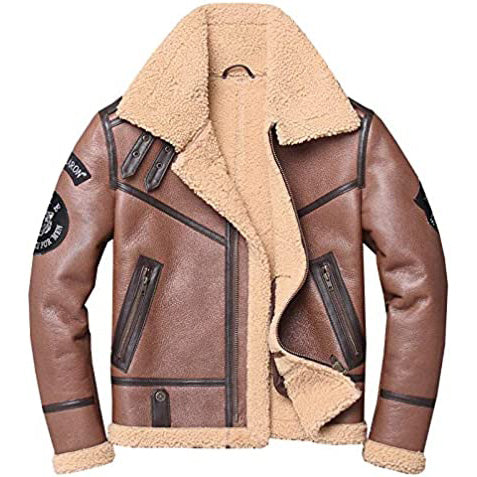
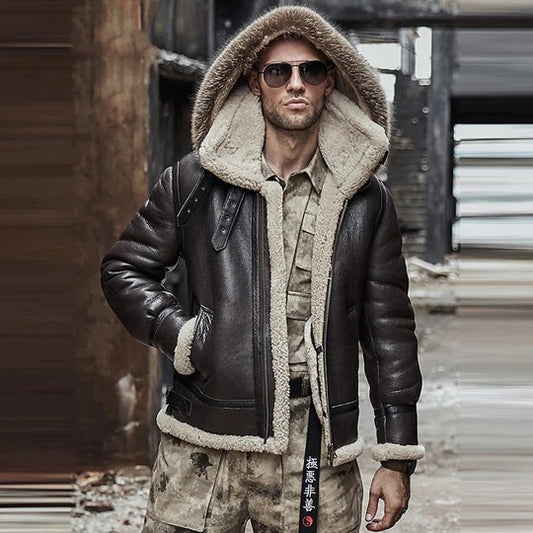
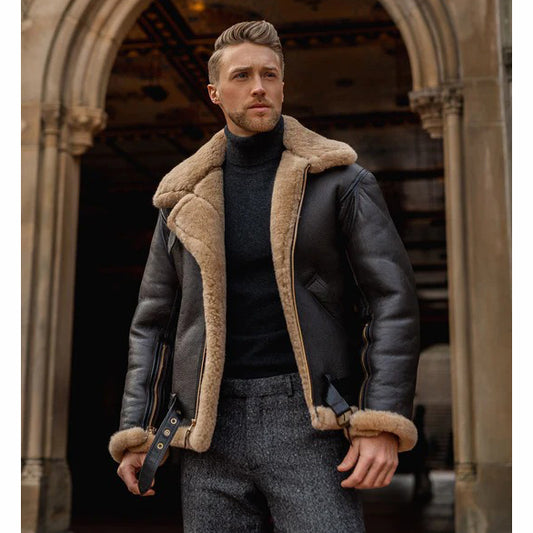
For real warmth, look for insulated or shearling-lined styles. Hooded designs like our men's brown hooded winter biker jacket add extra protection, while our B3 shearling aviator jackets are built for serious cold. Learn more about warm linings in our shearling vs sherpa guide.
Road Salt: The Hidden Winter Threat
In many cold cities, roads and sidewalks are treated with salt. Salty slush can splash onto the hem and sleeves of your jacket, and once it dries it leaves white, chalky marks. Salt also draws moisture out of leather and can dry it out over time.
To remove salt marks, wipe the area with a cloth lightly dampened in a mix of equal parts water and white vinegar, then wipe again with plain water. Let it dry naturally and apply conditioner. Test in a hidden spot first. Our full leather jacket cleaning guide covers stain removal step by step.
Riding in the Rain

Motorcyclists face more exposure than most, because wind drives rain into the leather at speed. Many riders carry a lightweight waterproof over-layer for longer rides in bad weather and let their leather dry naturally afterward. For summer rides where breathability matters more, see our guide to mesh motorcycle jackets. If you are choosing a hide for riding, our kangaroo vs cowhide comparison is worth a read.
Frequently Asked Questions
Is it bad to get a leather jacket wet?
Occasional light rain is fine. Damage usually comes from prolonged soaking combined with drying the jacket too quickly with heat.
Is a leather jacket waterproof?
No. Leather is naturally water-resistant to a degree, but it is not waterproof. Protective sprays improve its resistance.
How long does a wet leather jacket take to dry?
It depends on how wet it is and the thickness of the hide. A lightly damp jacket may dry in a few hours, while a soaked one can take a day or more. Be patient and avoid heat.
Can I wear a suede jacket in the snow?
It is best avoided. Melting snow soaks into suede and can leave stains. Choose smooth leather for snowy days.
Wear It With Confidence
A quality leather jacket is tougher than many people think. Light rain and snow are part of its life, and a well-cared-for jacket handles them easily. Keep it conditioned, protect it before the season starts, dry it slowly and naturally, and deal with salt marks early. Do that, and your jacket will see you through many winters. New to your jacket? Read how to break in a new leather jacket.