
-
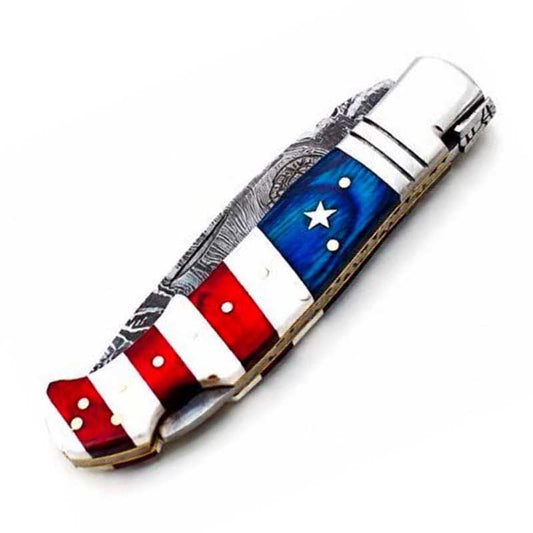
Damascus Steel Folding Pocket Knife with USA Flag Handle and Leather Sheath
Vendor:jacketskingdomRegular price $199.99 USDRegular priceUnit price per -
Damascus Steel Folding Knife with Hand-Engraved Bolsters
Vendor:jacketskingdomRegular price $249.99 USDRegular priceUnit price per$499.99 USDSale price $249.99 USDSale



Explore Our Folding Knives Collection
A good folding knife earns its place in your pocket by being there when you need it. It opens a parcel, trims a loose thread, slices an apple on a hike and handles small jobs around the house, then folds away safely until the next task. That simple practicality is why folding knives remain one of the most carried tools in the world.
The Jackets Kingdom folding knives collection is built for buyers who want that everyday usefulness without compromising on look and feel. You will find pocket-sized folders for daily carry, larger folding blades suited to outdoor and hunting tasks, and traditional designs that appeal to collectors and gift buyers alike.
Many customers come to us for leather jackets, shearling coats and aviator outerwear. Our knife range follows the same idea: functional pieces with character. A well-made folding knife shares a lot with a quality leather jacket. Both are built to be used, both look better with age, and both say something about the person who owns them.
Whether you are buying your first pocket knife, replacing an old favorite or searching for a gift for a father, partner or outdoor enthusiast, this collection gives you a focused place to compare options.
Discover Different Styles of Folding Knives
Folding knives are not one-size-fits-all. Blade length, handle shape, lock type and overall weight change how a knife carries and performs. Here are the main styles to consider as you browse.
Everyday Carry (EDC) Pocket Knives
EDC folding knives are designed to disappear into your pocket until you reach for them. They are usually compact, light and easy to open, often with a pocket clip that keeps the knife secure and accessible.
An EDC knife is ideal for:
- Opening packages, letters and plastic packaging
- Cutting cord, tape, zip ties and string
- Light food prep on the go, such as slicing fruit or cheese
- Quick fixes at work, in the garage or on the road
If you plan to carry a knife daily, look for a slim profile and a weight you will barely notice. A blade of around 2.5 to 3.5 inches is a common choice because it balances usefulness with comfortable carry. Always confirm the exact measurements in the product listing.
Folding Hunting and Skinner Knives
Hunters and outdoor users often want the cutting power of a fixed blade with the convenience of a folder. Folding hunting knives deliver that balance. They typically have a longer, sturdier blade and a fuller handle for a confident grip, even with cold or wet hands.
Skinner-style folding knives usually feature a curved edge with a pronounced belly. That sweeping curve helps with long, controlled cuts during field dressing and game processing. Many hunters carry a folding skinner as a backup to a fixed-blade knife, or as their main blade on lighter trips.
These knives also work well for camping, fishing and general outdoor tasks, such as preparing kindling, cleaning fish or cutting rope at camp.
Traditional and Gentleman's Pocket Knives
Not every knife needs a tactical look. Traditional folding knives often pair classic shapes with natural handle materials such as wood or bone, and many use time-tested mechanisms like the slip joint or lockback.
A gentleman's knife is a slimmer, more refined folder that slips easily into a trouser pocket, a blazer or a jacket. It suits office life, travel and smart-casual settings where a bulky outdoor knife would feel out of place. These designs make memorable gifts, particularly for milestone birthdays, anniversaries and Father's Day.
Collector and Decorative Folding Knives
Some buyers choose a folding knife as much for its appearance as its performance. Patterned steels, such as Damascus where a listing specifies it, along with engraved bolsters or distinctive handle scales, turn a working tool into a display piece.
Collector folders are a popular choice for enthusiasts building a set, and for gift buyers who want something with visual impact. Many owners still use them, while others keep them as a showpiece in a display case or gift box.
Understanding Folding Knife Lock Mechanisms
The lock is what keeps the blade open while you work, so it affects both safety and ease of use. Product listings will name the mechanism used; here is what each common type means.
Lockback
A lockback uses a spring-loaded bar along the spine of the handle. When the blade opens, the bar drops into a notch and holds it firmly. To close it, you press the exposed section of the spine. Lockbacks are known for strength and simplicity, and they are common on traditional and hunting folders.
Liner Lock
A liner lock uses a thin metal liner inside the handle that springs across behind the blade when it opens. You push the liner aside with your thumb to close the knife. This design is popular because it allows one-handed opening and closing.
Frame Lock
A frame lock works on the same idea as a liner lock, but part of the handle frame itself acts as the lock. This often creates a very solid lock-up and a clean, modern look.
Slip Joint
A slip joint does not lock. Instead, a backspring holds the blade in the open position with tension. Slip joints are a traditional design and suit light cutting tasks. Some regions have knife laws that treat non-locking folders differently, so check your local rules before you carry.
Folding Knives vs. Fixed Blade Knives
Choosing between a folder and a fixed blade comes down to how and where you work. Both have a place in a well-rounded kit.
- Portability: A folding knife closes to roughly half its open length, so it carries comfortably in a pocket. A fixed blade usually needs a belt sheath.
- Everyday practicality: Folders are easier to carry discreetly in town, at work and while traveling, which makes them the natural choice for EDC.
- Strength for heavy tasks: Fixed blades have no pivot or lock, so they suit heavy chopping, batoning and prolonged hard use.
- Cleaning: Fixed blades are simpler to clean after field dressing. Folders need a little extra attention around the pivot and inside the handle.
Many outdoor users carry both: a fixed-blade or skinner knife for heavy field work, and a folding knife for the small cutting jobs that come up all day long. If you mainly need a knife for daily tasks, camping and light hunting work, a quality folder is often all you need.
Materials, Design and Craftsmanship
The materials used in a folding knife shape how sharp it gets, how long it stays sharp, how it handles moisture and how it feels in the hand. Specifications vary by product, so check each listing for the exact steel, handle material and dimensions.
Blade Steel
Most folding knife blades fall into a few broad categories:
- Stainless steel: Resists rust and staining, which makes it a practical choice for everyday carry and humid conditions. It is generally easy to maintain.
- Carbon steel: Prized for taking a keen edge and being easy to resharpen. It needs more care, because it can rust or develop a patina if left wet.
- Damascus and patterned steel: Layered or patterned steel with a distinctive wavy appearance. Performance depends on the steels used, so read the listing for details.
Handle Materials
The handle is where you feel the knife, so it matters as much as the blade:
- Wood: Warm, classic and comfortable. Wood handles suit traditional and gift knives and develop character with use.
- Bone and horn: A traditional look with natural texture and variation from piece to piece.
- G10 and micarta: Layered composite materials known for grip, durability and resistance to moisture. Popular for outdoor and EDC folders.
- Metal: Stainless steel, aluminum and titanium handles give a sleek, modern profile and a solid feel.
Blade Shapes
The shape of the blade decides what a knife does best:
- Drop point: A versatile, strong tip that suits everyday use and hunting.
- Clip point: A finer, sharper tip for precision cuts and detailed work.
- Tanto: An angular, reinforced tip built for piercing and tough materials.
- Sheepsfoot: A straight edge with a rounded spine, great for controlled slicing and safer handling.
- Skinner: A broad, curved belly for sweeping cuts during game processing.
Design Details Worth Noticing
Small features make a big difference over years of use. Look for a smooth, centered pivot, a blade that sits evenly in the handle when closed, comfortable jimping (grip ridges) on the spine and a pocket clip or sheath that matches the way you carry. Thumb studs, nail nicks and flipper tabs each offer a different opening style, so choose the one that feels most natural to you.
How to Choose the Right Folding Knife
With so many styles available, it helps to start with how you will actually use the knife. Ask yourself the following questions.
- What will you use it for? Everyday tasks call for a compact EDC folder. Hunting and game processing suit a longer blade or a skinner profile. Gifting and occasional use make a traditional or decorative knife a great choice.
- How will you carry it? Pocket carry works best with a slim knife and a clip. Belt carry suits larger folders that come with a sheath or pouch.
- What blade length do you need? Shorter blades are easier to carry and control. Longer blades offer more reach for outdoor work. Check the exact length in each listing and confirm it meets local regulations.
- Which lock do you prefer? Lockbacks offer secure, traditional strength. Liner and frame locks allow quick one-handed closing. Slip joints suit lighter work.
- How much maintenance do you want? Stainless steel needs less care. Carbon steel rewards owners who enjoy sharpening and upkeep.
- What handle feels right? Wood and bone offer warmth and classic style. G10 and micarta give dependable grip in wet conditions. Metal handles feel modern and slim.
- How much does weight matter? For all-day carry, lighter knives are easier to live with. For hard outdoor use, a little extra weight can add confidence and control.
If you are buying a gift, think about the person's lifestyle. An outdoor lover will appreciate a hunting or camping folder, while a city professional may prefer a slim gentleman's knife they can carry to work.
How to Carry and Style Your Folding Knife
A folding knife is part of your everyday kit, much like a wallet, watch or favorite jacket. Choosing how to carry it is part of the experience.
Everyday and Casual Carry
For jeans, chinos and casual outfits, a clip-carry EDC folder sits neatly in the front pocket. Deep-carry clips keep more of the knife hidden for a cleaner look. Pair it with a leather biker jacket or bomber jacket for a rugged, ready-for-anything feel.
Smart-Casual and Work Settings
In the office or at dinner, a slim gentleman's folder is the more discreet option. Carry it in a trouser pocket or the inside pocket of a suede jacket or leather blazer, where it stays out of sight but within reach. Natural wood or bone handles complement smart outfits better than tactical styles.
Outdoor and Seasonal Carry
On autumn and winter trips, a larger folding hunting knife pairs naturally with heavier outerwear. A belt sheath or pouch keeps it accessible when wearing a shearling jacket or aviator coat over layers. In warmer months, a light EDC folder clipped to shorts or a pack strap keeps carry simple.
Building a Gift Set
Folding knives are popular gifts, and they pair well with other quality items. Consider combining a pocket knife with a leather jacket, a wallet or a care kit for a thoughtful gift for birthdays, anniversaries, graduations or the holidays. Always check the recipient is of legal age to own a knife where they live.
Caring for Your Folding Knife
A little maintenance keeps your folding knife sharp, smooth and safe for years.
- Clean after use. Wipe the blade and handle with a damp cloth, then dry fully, especially after cutting food or working outdoors.
- Keep it dry. Moisture trapped in the handle can cause rust. Never leave a knife wet or soak it, and avoid the dishwasher.
- Oil the pivot. A drop of knife or light machine oil on the pivot keeps the action smooth.
- Protect carbon steel. Apply a thin coat of oil to carbon blades to help prevent rust.
- Sharpen regularly. A honing rod or whetstone maintains the edge. A sharp knife is safer, because it needs less force.
- Store it closed. Keep your knife folded in a dry place or in its sheath or box when not in use.
Wooden and natural handles benefit from an occasional rub of mineral oil or wax to keep them from drying out.
Why Shop Folding Knives at Jackets Kingdom?
Jackets Kingdom specializes in outerwear with character, from leather and shearling jackets to aviator, bomber and biker styles. Our knife collection extends that same focus on rugged, functional design.
Here is what you can expect when you shop with us:
- A curated selection: Folding knives sit alongside our skinner knife range, so you can compare everyday, outdoor and hunting styles in one place.
- Easy comparison: Use each product page to review blade length, materials and design features side by side before you buy.
- A complementary range: Pair a folding knife with outerwear from our jacket collections for a gift or a complete outdoor look.
- Simple online shopping: Browse, compare and order from one store.
For questions about a specific knife, sizing for jackets, delivery or returns, visit our store policy pages or contact our customer support team.
Find the Right Folding Knife for Your Style
The best folding knife is the one that suits how you live. A compact EDC folder makes daily tasks easier. A folding hunting or skinner knife earns its place on the trail and in the field. A traditional or collector folder becomes a keepsake you will carry for years or pass down.
Take a few minutes to compare blade shapes, lock types and handle materials. Think about how you will carry your knife and how much care you want to give it. Then choose the one that feels right in your hand and fits your routine.
Each style in this collection serves a clear purpose, so you can browse with a clear picture of what to expect. Start with the style that matches your needs, narrow it down by lock type and handle material, and compare the specifications on each product page. If you need help deciding between two options, our support team is happy to point you in the right direction.
Your next favorite everyday tool is waiting in the Jackets Kingdom folding knives collection.
Find Your Next Everyday Carry: Shop Folding Knives at Jackets Kingdom
From slim pocket knives for daily tasks to folding hunting and skinner knives built for the outdoors, the right blade is a few clicks away. Compare styles, lock types and handle materials, then choose the folding knife that fits the way you work, travel and explore.
Frequently Asked Questions
What is a folding knife used for?
A folding knife handles everyday cutting jobs such as opening packages, cutting cord, light food prep, camping chores and small repairs. Its blade folds into the handle, so it is safe and easy to carry in a pocket.
What is the best folding knife for everyday carry?
For EDC, choose a lightweight folder with a blade of roughly 2.5 to 3.5 inches, a reliable lock and a pocket clip. A drop point blade in stainless steel is a versatile, low-maintenance starting point.
What is the difference between a folding knife and a pocket knife?
The terms are often used interchangeably. "Pocket knife" usually describes smaller, traditional folders, while "folding knife" covers every knife with a blade that folds into the handle, including larger hunting folders.
Which lock mechanism is safest on a folding knife?
Lockback, liner lock and frame lock designs all hold the blade securely when made well. Lockbacks are prized for strength, while liner and frame locks allow easy one-handed closing. Slip joints do not lock and suit lighter tasks.
Can a folding knife be used for hunting?
Yes. Folding hunting and skinner knives have longer blades, a curved belly and a sturdy grip for field dressing and game processing. Many hunters carry a folder alongside a fixed-blade knife.
Is stainless steel or carbon steel better for a folding knife blade?
Stainless steel resists rust and needs less care, making it ideal for daily carry. Carbon steel takes a very sharp edge and resharpens easily, but needs regular drying and oiling to prevent rust.
What handle material is best for a folding knife?
It depends on use. Wood and bone offer classic looks for traditional and gift knives. G10 and micarta give a secure grip in wet conditions. Metal handles feel slim and modern for everyday carry.
How do I clean and maintain a folding knife?
Wipe the blade after each use, dry it fully and add a drop of oil to the pivot from time to time. Keep the edge sharp with a honing rod or whetstone, and never put a folding knife in the dishwasher.
Is it legal to carry a folding knife?
Knife laws vary by country, state and city. Rules can cover blade length, lock type, opening mechanism and where you carry. Always check your local laws before carrying or gifting a folding knife.
Does a folding knife make a good gift?
Yes. A quality folding knife is a practical, lasting gift for outdoor lovers, collectors and anyone who likes useful everyday tools. Choose a traditional or decorative style for special occasions, and make sure the recipient is of legal age.