
-
Handmade Brown & White Cowhide Leather Suit - Trucker Jacket & Pants Set
Vendor:jacketskingdomRegular price $475.99 USDRegular priceUnit price per$549.99 USDSale price $475.99 USDSale -
Men’s Real Cowhide Leather Jacket - Western Hair-On Hide Style
Vendor:jacketskingdomRegular price $289.99 USDRegular priceUnit price per$389.99 USDSale price $289.99 USDSale

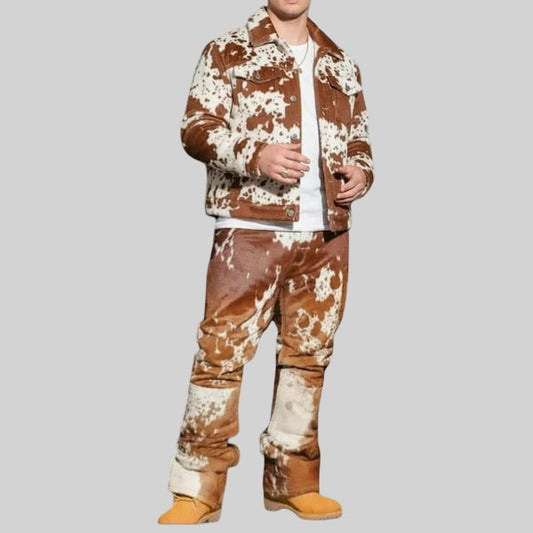

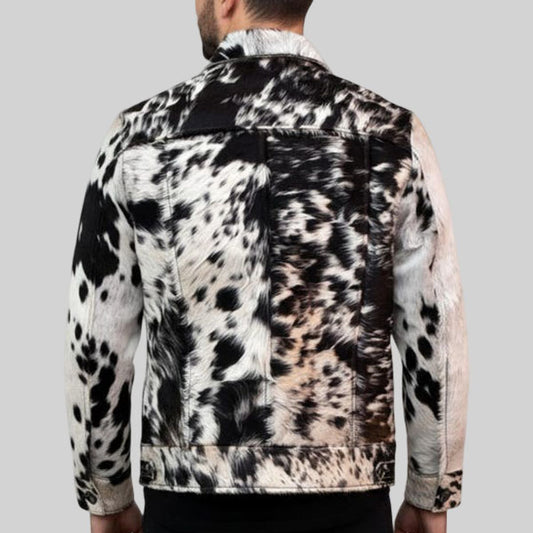
What Is Cowhide Western Wear
Cowhide western wear covers a specific category of outerwear built from cattle hide and styled around traditional western details like yokes, fringe, and snap closures. Unlike standard leather jackets, cowhide pieces often keep visible natural markings, especially in hair-on styles where the original coat pattern remains intact.
This collection pulls together jackets, vests, dusters, and fringe or patchwork styles that share that western identity. It's built for shoppers who want more than a plain leather jacket, whether that means ranch-ready durability, rodeo styling, or simply the distinctive look that comes from real hide texture.
If you're new to cowhide, the biggest thing to understand upfront is that no two hides look exactly alike. The color, pattern, and markings vary naturally from piece to piece, which is part of what makes cowhide western wear different from mass-produced leather goods.
Product Types in This Collection
Western cowhide wear spans a few distinct product categories, each suited to different needs and occasions.
Cowhide Western Jackets
These jackets typically feature a shorter, structured cut with a western yoke across the chest and back, snap closures instead of zippers, and sometimes fringe along the arms or chest. They're built for a rugged, classic western silhouette rather than the slim, urban look common in standard leather jackets.
Cowhide Vests
Cowhide vests offer the same western detailing without sleeves, making them easier to layer over shirts or under jackets. They're a common choice for warmer climates or for shoppers who want the cowhide look without the added weight and warmth of a full jacket.
Western Dusters and Long Coats
Dusters are longer coats, often extending past the knee, historically designed to protect riders and their clothing from dust and weather. In cowhide, these coats bring a heavier, more substantial feel and work well as a statement outer layer over other western pieces.
Fringe and Patchwork Styles
Fringe detailing along the sleeves or chest and patchwork construction using multiple hide sections are two of the most recognizable design elements in western cowhide wear. Patchwork styles often combine different hide colors or patterns into one jacket or vest, creating a distinct look that varies more than a single-hide piece.
Understanding Cowhide Leather
Cowhide is a specific type of leather, and within cowhide there are a few important distinctions worth understanding before you buy.
Hair-On Cowhide
Hair-on cowhide keeps the animal's natural coat intact on the outer surface, which means the color, pattern, and texture you see are unique to that specific hide. This is what gives hair-on cowhide jackets and vests their distinctive brindle, spotted, or tricolor appearance. Because the pattern comes from the natural hide rather than a printed or dyed design, every piece looks slightly different.
Tanned Cowhide
Tanned cowhide goes through a process that removes the hair and treats the leather for a smoother, more traditional finish. This is closer to what most people picture when they think of a standard leather jacket, though cowhide specifically tends to be thicker and more durable than lighter leathers like lambskin.
Natural Pattern Variation
Because hair-on cowhide relies on the animal's natural markings, product photos are representative rather than exact. The piece you receive will have its own unique pattern and color distribution, which is a normal and expected part of buying genuine hair-on cowhide rather than a flaw.
How to Choose the Right Cowhide Western Piece
A few practical factors help narrow down which cowhide piece fits your needs.
Fit and Sizing
Cowhide is thicker and less flexible than lighter leathers, so it tends to fit closer to true size with a bit less give than lambskin or fabric jackets. Check the chest and shoulder measurements carefully, and if you plan to layer a shirt or sweater underneath, consider sizing up slightly for comfortable movement.
Hide Pattern and Color
If you're choosing a hair-on cowhide piece, decide whether you want a more uniform, solid-color hide or a bold, high-contrast pattern like a brindle or spotted design. Because patterns vary by piece, it's worth reviewing product photos closely if pattern placement matters to you.
Style and Detailing
Decide how much western detailing you want. A plain cowhide jacket without fringe offers a more subtle look, while fringe and patchwork styles lean further into a classic western or rodeo aesthetic. Vests are a good entry point if you want the look without committing to a full jacket or coat.
Season and Climate
Vests and lighter jackets work well for milder climates or as a layering piece in fall. Full jackets and dusters offer more coverage and warmth, making them a better fit for colder regions or as an outer layer over other clothing in winter.
Budget
Hair-on cowhide and patchwork designs typically cost more than plain tanned cowhide pieces due to the more involved cutting and matching process required to work with natural hide patterns. Vests are generally a lower-cost entry point into the collection compared to full jackets or dusters.
Styling Cowhide Western Wear
Cowhide western pieces work best when the rest of the outfit stays relatively simple, letting the jacket or vest stand out.
- Pair a cowhide vest over a plain button-down shirt and jeans for a classic, uncomplicated western look.
- Wear a hair-on cowhide jacket with dark denim and boots, keeping other accessories minimal so the hide pattern remains the focal point.
- Layer a duster coat over a simpler outfit for a dramatic, statement look suited to colder days or western-themed events.
- Use fringe jackets as a standalone piece rather than pairing them with other heavily detailed items.
When and Where to Wear It
Cowhide western wear fits naturally into several settings tied to its ranch and rodeo origins, as well as broader western-inspired fashion.
- Ranch and outdoor work: Cowhide's thickness and durability make it a practical choice for outdoor tasks and rougher wear.
- Rodeo and western events: Fringe jackets, vests, and patchwork styles fit naturally into rodeo and western-themed occasions.
- Everyday western style: Simpler cowhide jackets or vests without heavy fringe work well as an everyday layer for anyone drawn to western aesthetics.
- Cold weather layering: Dusters and full jackets provide substantial coverage for cooler climates.
Features Worth Checking Before You Buy
Before choosing a piece from this collection, review these details on the product page:
- Hide type: Hair-on versus tanned, since this affects both appearance and texture.
- Closure style: Snap buttons are traditional for western pieces, though some styles use zippers.
- Yoke and stitching details: Western yokes add structure across the chest and back and are a hallmark of the style.
- Fringe or patchwork: Confirm placement and amount if these details matter to your preferred look.
- Lining: Some jackets and dusters include a lining for added warmth and comfort, while others are unlined for a lighter feel.
Caring for Cowhide Leather
Cowhide is a durable material, but it still benefits from basic care to keep its texture and finish over time. Keep pieces away from prolonged direct sunlight and heat sources, since both can dry out the hide. If a piece gets wet, let it air dry naturally rather than using direct heat. For hair-on cowhide specifically, avoid brushing or rubbing the hair side too aggressively, as this can affect the texture over time. A leather conditioner can help maintain tanned cowhide sections, but always check the specific care instructions included with your piece, since hair-on and tanned sections may require different approaches. Store jackets and vests on a sturdy hanger to help them keep their shape.
Why Shop This Collection at Jackets Kingdom
This collection groups cowhide-specific western pieces together rather than mixing them into a general leather jacket category, making it easier to compare hide types, patterns, and western styling side by side. The guidance above is meant to help you understand what you're actually buying, from the difference between hair-on and tanned cowhide to what fringe and patchwork details mean for the finished look, so you can choose with more confidence.
Finding Your Right Piece
If you want the boldest, most distinctive look, a hair-on cowhide jacket or patchwork style will stand out the most. If you'd rather ease into the western aesthetic, a plain tanned cowhide vest is a simpler starting point. For colder climates or maximum coverage, a duster coat offers the most warmth and presence. Whatever you choose, check the hide type and sizing details closely, since cowhide's natural variation means each piece has its own character.
FAQ's
What's the difference between hair-on cowhide and regular leather?
Hair-on cowhide keeps the animal's natural coat and pattern visible on the outer surface, giving each piece a unique color and marking pattern. Regular tanned leather goes through a process that removes the hair for a smoother, more uniform finish. Both come from cowhide, but they look and feel noticeably different.
Will my cowhide jacket look exactly like the product photo?
Not exactly, especially with hair-on cowhide styles. Because the pattern comes from the natural hide, every piece has its own unique markings and color distribution. Product photos give a good representation of the general style and color range, but some natural variation should be expected.
Is cowhide western wear suitable for everyday use, or just special occasions?
It depends on the style. A plain cowhide jacket or vest without heavy fringe works well as an everyday piece, while fringe jackets and patchwork designs lean more toward western-themed events or occasions where a bolder look fits naturally.
How do I take care of a hair-on cowhide jacket?
Keep it away from prolonged sun exposure and direct heat, and avoid excessive rubbing on the hair side, which can affect its texture over time. If the jacket gets wet, let it air dry naturally. Always check the specific care instructions included with your piece, since hair-on and tanned sections may need slightly different care.
Conclusion
Cowhide western wear brings a level of character that's hard to find in standard leather outerwear, largely because no two hides look exactly alike. Whether you're after the bold, natural pattern of a hair-on cowhide jacket, the practicality of a cowhide vest, or the coverage of a full duster coat, the right choice comes down to how much western detailing you want and how you plan to wear it. Take a look at the hide type and fit guidance above, then explore the collection to find the cowhide piece that matches your style and the way you actually dress.